Plane Ticket Booking: How to Choose the Right Seat for Your Journey
By Neeraj Kumar
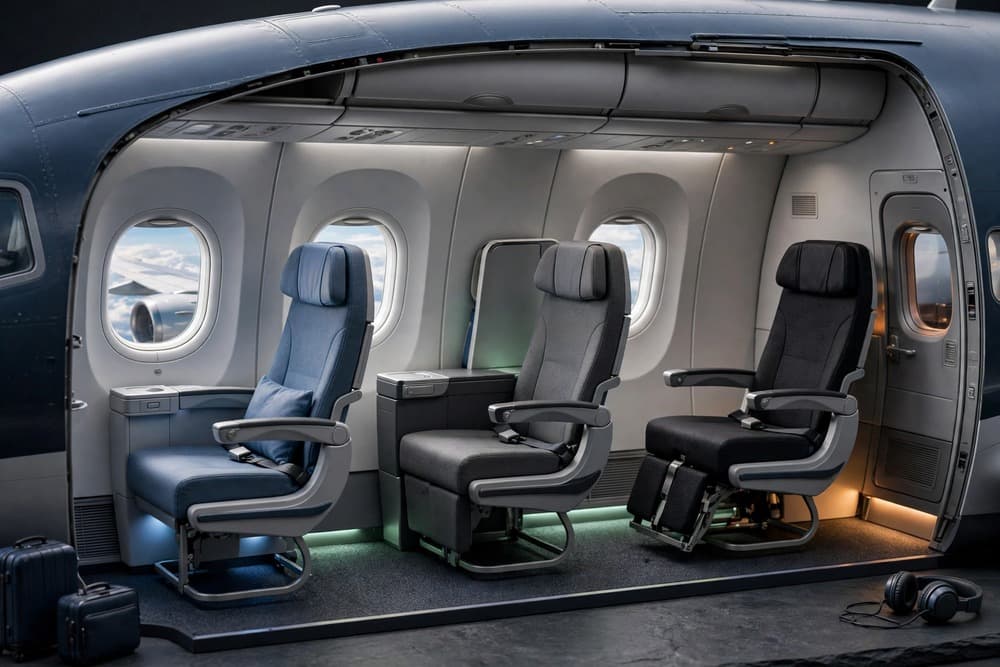
Choosing the right seat is an important part of plane ticket booking. Although many travellers focus mainly on flight prices, departure timings and baggage allowances, seat selection can also influence the overall flying experience. Whether you are travelling for a short domestic trip or a long international journey, the right seat can make your flight more comfortable and convenient.
Some passengers prefer window seats because they enjoy looking outside, while others choose aisle seats for easier access to the washroom and overhead storage. Travellers with long legs may prefer extra-legroom seats, whereas families often look for seats that allow them to sit together. Each option offers different benefits, and the best choice depends on your personal preferences, travel duration and airline policies.
However, selecting a seat is not always as simple as choosing a window or an aisle. Aircraft layouts, seat pitch, recline options, proximity to lavatories, emergency exit restrictions and additional charges can all affect your decision.
This guide explains how to choose the right seat during plane ticket booking, what different seating options offer and which factors you should consider before confirming your reservation.
Why Is Seat Selection Important During Plane Ticket Booking?
Seat selection can influence comfort, convenience and the overall experience of air travel. Even when passengers travel on the same flight and in the same cabin class, their experiences may differ depending on where they sit.
For example, a window seat may be suitable for someone who wants to rest without being disturbed, while an aisle seat may be more convenient for a passenger who frequently needs to move around.
Choosing the right seat can help you:
Enjoy a more comfortable journey.
Access the aisle more conveniently.
Get additional legroom where available.
Sit closer to family members or travel companions.
Reduce disturbances during rest.
Choose a location that suits your travel preferences.
Make better use of available seating options.
Seat selection becomes particularly important on long-haul flights, where passengers may spend several hours in the same position.
1. Understand the Different Types of Aircraft Seats
Before selecting a seat, understand the common seating options available on commercial aircraft. Each type has its own advantages and limitations.
Window Seats
Window seats are popular among travellers who enjoy looking outside during take-off, landing and the journey itself.
Advantages:
Opportunity to enjoy aerial views.
Convenient for passengers who want to rest against the aircraft wall.
Less disturbance from passengers walking through the aisle.
You do not need to move frequently to allow others to pass.
Disadvantages:
Getting up usually requires asking other passengers to move.
Access to the aisle is limited.
Some window seats may have restricted or no direct window view because of aircraft design.
Window seats can be a suitable choice for travellers who prefer looking outside, taking photographs where permitted and remaining seated for longer periods.
Aisle Seats
Aisle seats are useful for passengers who value freedom of movement.
Advantages:
Easier access to the aisle.
More convenient when visiting the washroom.
Suitable for passengers who like stretching their legs when permitted.
Easier to leave the seat without disturbing other passengers.
Disadvantages:
Passengers and crew may occasionally move close to your seat.
You may need to move when other passengers want to leave their seats.
Some passengers may accidentally bump into you while walking through the aisle.
Aisle seats are often preferred by frequent travellers, business passengers and people who do not want to remain seated for long periods.
Middle Seats
Middle seats are located between window and aisle seats in an aircraft row.
Advantages:
May be available when other preferred seats are already occupied.
Can be useful when travelling with friends or family who want to sit together.
Disadvantages:
Limited personal space compared with window or aisle positions.
Both neighbouring passengers may need access to the armrests.
You may have to coordinate with other passengers when leaving your seat.
If comfort and personal space are your priorities, consider a window or aisle seat when available.
2. Check the Aircraft Seating Layout Before Booking
One of the most useful steps during plane ticket booking is reviewing the aircraft seating layout.
Different aircraft models have different cabin configurations. Even two aircraft operated by the same airline may have different seat arrangements, depending on their model and cabin configuration.
For example, some economy cabins use a 3-3 seating arrangement, while larger aircraft may have layouts such as 3-4-3 or other configurations.
Before selecting a seat, review:
Number of seats in each row.
Window, middle and aisle positions.
Location of emergency exit rows.
Position of lavatories and galleys.
Available extra-legroom seats.
Cabin class and seat configuration.
Airline websites often provide a seat map during booking or through the manage-booking section.
Remember that aircraft assignments and seating layouts can change. A seat shown on a seat map is not always guaranteed to remain unchanged if the airline changes the aircraft or operational requirements.
3. Choose Extra-Legroom Seats for More Space
Legroom is an important consideration, especially for taller passengers and travellers taking long flights.
Extra-legroom seats generally provide more space between rows than standard economy seats. These seats may be located near emergency exits, at bulkheads or in specially designated areas.
Benefits of extra-legroom seats include:
More space for your legs.
Greater comfort for some taller passengers.
Easier stretching while seated.
Potentially more convenient movement within your seating area.
However, extra-legroom seats may come with additional charges. Their availability and features depend on the airline and aircraft.
Before purchasing one, check the exact seat conditions. Some exit-row seats may have restrictions on who can occupy them. For example, passengers may need to meet airline safety requirements and be capable of assisting during an emergency.
Also, some bulkhead seats have fixed armrests or limited under-seat storage. Therefore, extra legroom does not automatically mean every aspect of the seat will be more convenient.
4. Consider Seats Near the Front of the Aircraft
Seats near the front of the aircraft can be useful for travellers who want to leave the plane sooner after landing.
Depending on the aircraft layout and airport arrangements, passengers seated towards the front may have a shorter route to the aircraft exit.
Potential benefits include:
Convenient disembarkation.
Less time spent waiting to leave the aircraft.
Easier access to some front cabin facilities, depending on the airline.
However, these seats are not necessarily quieter or more spacious. Their actual comfort depends on the aircraft configuration.
Front-row and bulkhead seats may also have different storage arrangements. Passengers may need to place certain belongings in the overhead compartment during take-off and landing.
If you have a tight onward connection, check the actual arrival airport, terminal and connection requirements instead of assuming that a front seat alone will guarantee a faster transfer.
5. Understand the Benefits and Limitations of Emergency Exit Row Seats
Emergency exit row seats are often attractive because some aircraft configurations provide additional legroom in these rows.
However, they are not suitable for everyone.
Passengers occupying emergency exit row seats may be required to meet specific airline safety conditions. These requirements can include the ability to understand crew instructions, operate the emergency exit when instructed and assist during an evacuation.
Restrictions may apply to:
Children.
Passengers travelling with infants.
Passengers with certain mobility limitations.
Travellers who cannot fulfil the required safety responsibilities.
The exact eligibility conditions vary by airline and applicable regulations.
Additionally, emergency exit row seats may have restrictions on reclining, armrest movement or under-seat storage. Always read the airline's conditions before paying for these seats.
Never select an emergency exit seat simply because it offers more legroom. Safety requirements should always come first.
6. Select Seats Based on Your Travel Duration
The ideal seat can depend on how long you will be travelling.
A seat that feels comfortable on a one-hour domestic flight may not be your preferred option on a long international journey.
Short Domestic Flights
For short flights, many passengers prioritise convenience over additional comfort features.
You may consider:
An aisle seat if you prefer easy movement.
A window seat if you enjoy the view.
A front section seat if you want to disembark sooner, subject to aircraft layout.
Medium-Distance Flights
For journeys lasting several hours, consider legroom, seat location and personal comfort.
Check whether the selected seat offers suitable recline and whether it is close to high-traffic areas.
Long-Haul International Flights
Long-haul journeys require more attention to seating preferences.
Consider:
Extra legroom, if needed.
A window seat if you want to rest.
An aisle seat if you frequently move around.
A location away from busy galleys and lavatories, if available.
The seat's recline and configuration.
Regardless of seat selection, follow airline safety instructions and move around when permitted to avoid remaining in one position for excessively long periods.
7. Check Seats Near Lavatories and Galleys
Seats near lavatories and galleys may offer convenience, but they can also involve more disturbances.
Passengers frequently move around these areas, and crew members may use nearby spaces for meal preparation and service activities.
Possible disadvantages include:
More passenger movement.
Noise from doors and nearby activity.
Queues near lavatories.
Limited privacy in certain locations.
If you prefer a quieter environment, consider reviewing the seat map and choosing a location away from these areas.
However, aircraft layouts differ, so do not assume that every seat near a lavatory has the same disadvantages.
8. Compare Seat Selection Charges Before Paying
Many airlines allow passengers to select seats during booking, while others may provide complimentary seat assignments depending on the fare type, membership status or route.
During plane ticket booking, review whether your preferred seat requires an additional payment.
Possible charges may apply to:
Preferred window seats.
Aisle seats in selected rows.
Extra-legroom seats.
Front-row seats.
Emergency exit row seats.
Premium economy or other upgraded seating options.
Before paying, compare the additional seat-selection fee with the overall ticket price.
For example, if your journey is short, paying extra for a preferred seat may not provide enough value for your requirements. On a long journey, however, additional legroom or a preferred location may be worth considering.
Always check the airline's official seat-selection policy because fees, free-selection windows and eligibility conditions vary.
9. Choose Suitable Seats When Travelling with Family or Friends
Travelling with family members or friends often makes seat selection more important.
Passengers may prefer sitting together so they can communicate easily and manage their belongings conveniently.
Consider these tips:
Select seats together when the booking process allows it.
Check whether the airline charges for adjacent seats.
Review the aircraft layout before choosing a row.
Confirm seating arrangements for children.
Check the airline's family seating policy.
Avoid assuming that separate reservations will automatically result in adjacent seats.
If you are travelling with a child or infant, review the airline's specific seating and safety requirements. Some seating locations may not be available to passengers travelling with infants.
If your group is travelling on separate booking references, contact the airline or booking provider to ask whether the reservations can be linked or seating requests can be recorded. However, a request does not always guarantee adjacent seats.
10. Review Seat Comfort Beyond Legroom
Legroom is important, but it is not the only factor that determines whether a seat is comfortable.
Before choosing a seat, consider the following features:
Seat width: Different aircraft and cabin configurations may offer different seat widths. This can affect personal comfort.
Seat pitch: Seat pitch is the distance between a point on one seat and the same point on the seat in front. It is commonly used to describe the space available between rows, but it is not identical to the usable legroom every passenger experiences.
Recline: Some seats may have limited or no recline, particularly in certain bulkhead or exit-row positions.
Armrests: Fixed armrests can affect personal space and the ability to move between seats.
Window alignment: Not every window seat is perfectly aligned with a window.
Storage: Certain seats may have restrictions on under-seat storage during specific phases of the flight.
Reviewing these details can help you make a more informed seating decision.
11. Use Seat Maps and Independent Seat Reviews Carefully
Seat maps and aircraft reviews can provide useful information when selecting a flight seat.
Some online resources show aircraft layouts, seat positions and passenger feedback. These can help you
identify potentially desirable or less convenient locations.
You can use:
The airline's official seat map.
Aircraft configuration information.
Independent aircraft seat-review websites.
Passenger feedback about specific aircraft layouts.
However, treat independent reviews as guidance rather than guaranteed information. A seat experience can vary based on aircraft configuration, maintenance changes and individual preferences.
Always confirm the available seat and its conditions through the airline or booking platform before making payment.
12. When Should You Select Your Seat?
The right time to select a seat depends on the airline's booking rules and your preferences.
Common opportunities include:
During flight booking: Some airlines allow passengers to select seats while purchasing tickets.
After booking: You may be able to choose a seat through the airline's manage-booking facility.
During online check-in: Some airlines allow seat selection or changes when online check-in opens.
At the airport: Available seats may sometimes be assigned or changed at the check-in counter, subject to airline policies and availability.
If you have a strong preference for a particular seat, checking availability early may provide more options. However, early selection does not always guarantee that the airline will retain the same seat if operational
changes become necessary.
Review the seat-selection rules for your specific flight before deciding when to choose.
Common Seat Selection Mistakes to Avoid
Even when passengers carefully compare flight prices, they sometimes overlook important seating details.
Here are common mistakes to avoid:
Choosing only by window or aisle preference: Consider legroom, location and aircraft configuration too.
Ignoring seat-selection fees: Check whether the selected seat requires an additional payment.
Selecting an emergency exit seat without checking eligibility: Read the safety conditions first.
Assuming all aircraft have the same layout: Verify the aircraft and its seating configuration.
Ignoring seats near busy areas: Review the location of galleys and lavatories.
Expecting guaranteed adjacent seats: Confirm the airline's family and group seating policies.
Overlooking limited-recline seats: Check seat information before selecting a preferred row.
Relying entirely on old seat reviews: Confirm current details with the airline.
Avoiding these mistakes can help you choose a seat that better matches your expectations.
Frequently Asked Questions (FAQs)
1. Which seat is best during plane ticket booking?
The best seat depends on your preferences. Window seats are suitable for travellers who enjoy the view, aisle seats provide easier movement and extra-legroom seats may be useful for taller passengers.
2. Is a window seat better than an aisle seat?
Neither option is universally better. Window seats offer outside views and fewer interruptions from aisle traffic, while aisle seats provide easier access to the washroom and movement around the cabin.
3. Are extra-legroom seats worth paying for?
Extra-legroom seats may be worth the additional cost for taller passengers or travellers taking long flights. However, compare the price and seat conditions before purchasing.
4. Can I choose my flight seat after booking?
Many airlines allow passengers to select or change seats after booking through their website or application. Availability and fees depend on the airline, fare type and booking conditions.
5. Which seats should I avoid on an aeroplane?
There is no universally unsuitable seat. However, if you prefer a quieter journey, you may want to review seats near lavatories and galleys. Also check for restricted recline, limited storage or other seat-specific
conditions.
6. Are emergency exit row seats comfortable?
Emergency exit row seats may provide additional legroom on some aircraft. However, passengers must meet the airline's safety eligibility requirements, and certain restrictions may apply.
7. Do airlines charge for seat selection?
Some airlines charge for selected seats, while others offer free seat selection depending on fare conditions, route or passenger eligibility. Always check the airline's current policy.
8. How can I sit with my family during a flight?
Choose adjacent seats during booking whenever possible. If you have already booked separately, contact the airline to ask about linking reservations or requesting nearby seats. Seating together may still depend on availability and airline policies.
9. What is seat pitch in an aeroplane?
Seat pitch is the distance between a point on one seat and the corresponding point on the seat in front. It is commonly used to describe the space between rows and can help passengers compare seating configurations.
10. Can an airline change my selected seat?
Yes. Airlines may change assigned seats because of aircraft substitutions, operational requirements, safety considerations or other circumstances. Review the airline's terms for information about seat changes and any available assistance.
Conclusion
Choosing the right seat is an important part of planning a comfortable journey. During plane ticket booking, travellers should consider more than just window, middle or aisle preferences. Aircraft layout, legroom, seat pitch, recline, proximity to busy areas, additional charges and personal travel requirements can all influence the decision.
Before confirming your reservation, review the airline's seat map and understand the conditions associated with your preferred seat. If you are travelling with family, check the seating policy in advance. For longer journeys, consider whether extra legroom or a more convenient location is worth the additional cost.
Ultimately, the best seat is the one that matches your comfort, budget and travel needs. A little planning before departure can help make your next flight more convenient and enjoyable.